





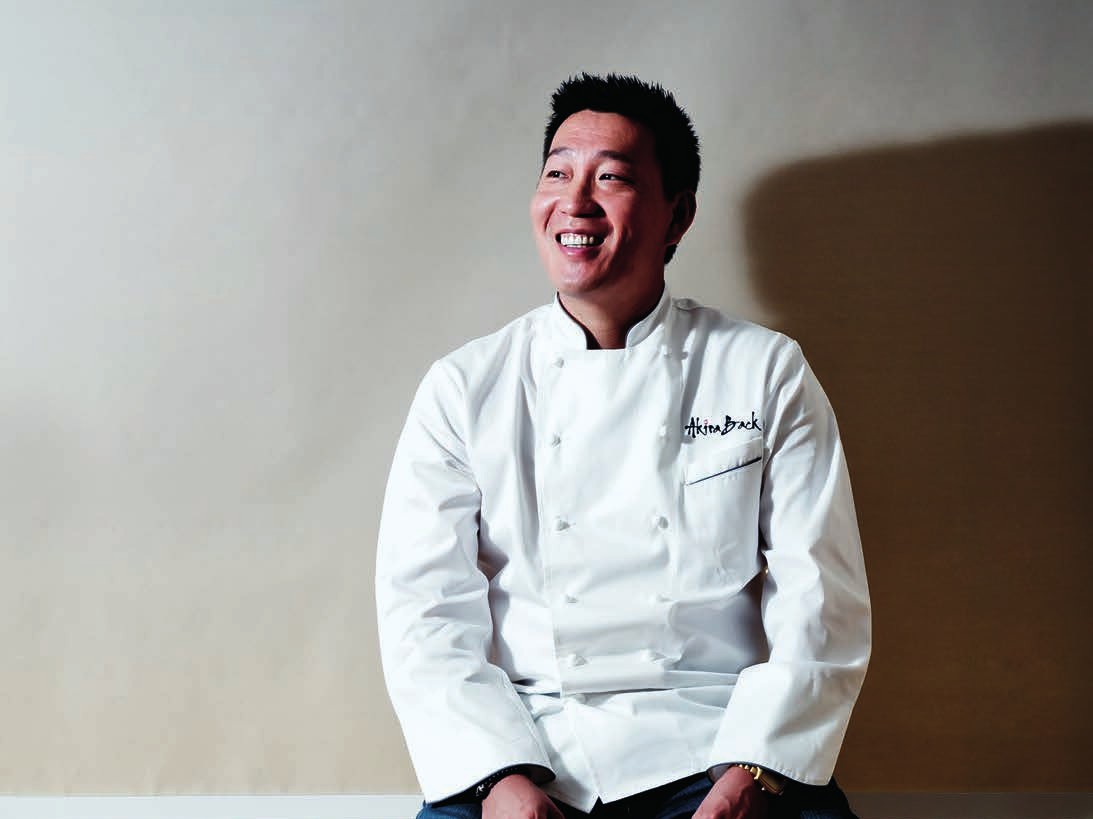
He counts A-listers among his clients and has 20 restaurants and bars scattered across the globe including one coming to Portugal soon, not to mention his namesake Akira Back restaurant opening at the Mandarin Oriental Mayfair in London as well as the 14-seat Dosa, the ABar Lounge and ABar Rooftop.
What were your first impressions of Aspen?
I was 14 years old when we arrived. I wasn’t planning to move to the USA, so I didn’t study English. All I could say was ‘hi’. I was the only Korean. I remember seeing white snow and Caucasians with blue eyes, so it was pretty scary.
What did you miss from Seoul?
Friends and language… I didn’t miss the food because I had my mum with me. But I was missing being able to express myself easily. McDonald’s was popular and I couldn’t go and order a hamburger, because they wouldn’t be able to understand me. I didn’t want to just point at something because I was too shy, so my mum would point for me. I was 17 before I could speak English fluently.
You were a professional snowboarder before you were a chef. How did the snowboarding start?
I wanted to make friends. When I went to the slopes the cool people did snowboarding. So I just followed them and I tried to pick it up. My father and my mum were very supportive of my snowboarding career. They were happy until I said I was going to leave and start cooking.
Where did your interest in being a chef come from?
I was about 20 before I went into the kitchen. There was a restaurant where the snowboarders used to hang out after training, and I thought the guy who ran the restaurant was really cool. I used to see him eating and drinking with the customers. I thought it looked awesome. My favourite dish was called Dynamite. It was tempura. If someone gave it to me now, I’d think ‘what the hell is this?’ (Laughs.)
I told everybody I’m going to go to Korea and get a Michelin star. It was a lot of work.
You still graduated from college…
I promised my parents I would graduate college. I was already working as a chef and was about to open a big restaurant in Denver. Everyone was saying ‘why are you here’? I said it was because I promised my parents.
After launching restaurants across the globe, you opened one in your hometown of Seoul, Korea.
I told everybody I’m going to go to Korea and get a Michelin star. It was a lot of work. I opened the restaurant in the area where I grew up. I wanted that area and I didn’t worry about the rent. But after two years with no sign of a Michelin star, my eyes started twitching. Then I got an email from Michelin.
How did you feel about the first Michelin star?
It’s awesome. I told everyone my dream had come true. I don’t want to lose it, but if I lose it who cares? I will still have a Michelin-star restaurant on my resumé for life.
How does the restaurant industry differ today from when you started as a young chef?
I feel it was a simpler time back then, when being a chef used to be more focused on the cooking. Now, with the popularity of social media, there are more responsibilities [such as videoing] behind the scenes shots. At times it can be flattering that people want to know every aspect of a great restaurant, especially with the younger generation, but it can pull you away from the kitchen.
What do you love most about your job?
Meeting people. When people from other countries drop by to surprise you. I like to call them my friends, but I don’t have their phone number or email. My customers fly pretty much everywhere. When I opened a restaurant in Singapore, 60 people flew over from Jakarta. When I opened in Seoul people flew there from Singapore, Jakarta and Dubai. They might have been there on business, but it’s really cool to see them stop by the restaurant.
Words by Claire Turrell.
Follow Akira Back
IG: @chefakiraback