





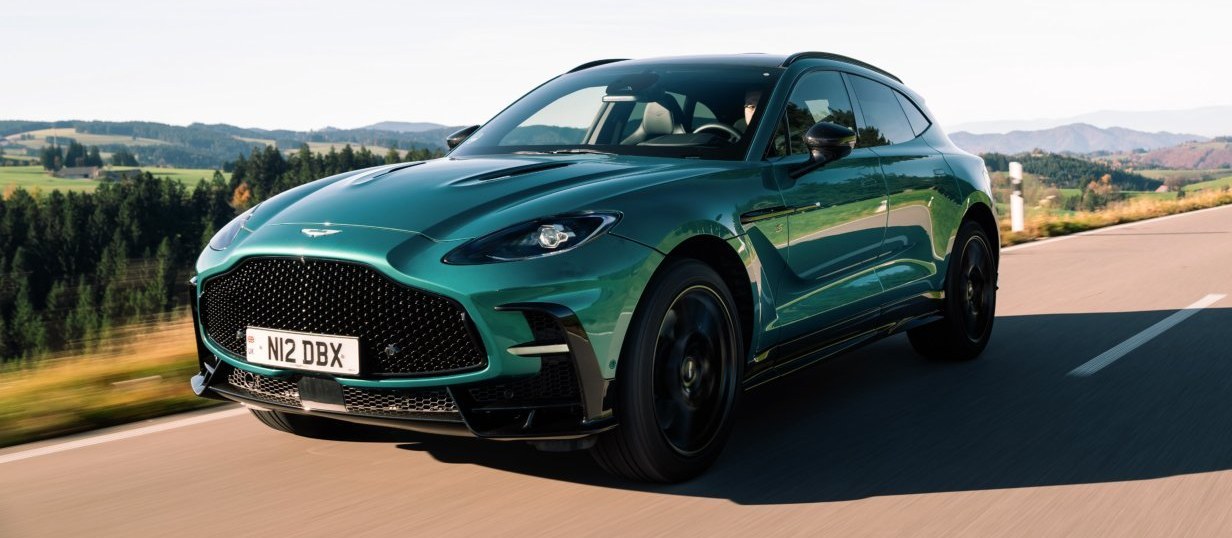
The Superstrada 125 stretches between the maquis-covered hills and limestone cliffs of the Supramonte on Sardinia’s east coast. The sky is a heavy steel grey, the kind that precedes a Mediterranean storm — low clouds, slanting light, and something electric in the air that hints at lightning. A backdrop almost too perfectly suited to the machine produced by Aston Martin.
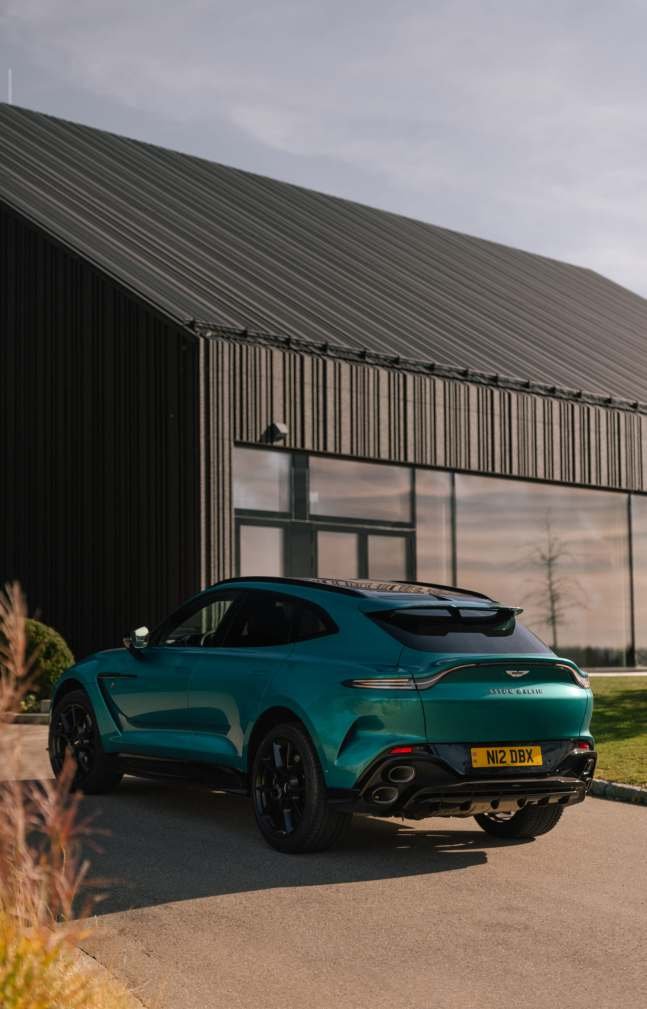
The DBX 707 devours the asphalt with a quiet authority that commands respect. This is not an SUV trying to blend into the background — its gaping grille, stacked quad exhausts and broad-hipped profile are worn with pride. And yet, paradoxically, it is also an SUV that puts you at ease from the very first kilometres. That is perhaps the most surprising thing of all: how did the team in the small village of Gaydon, Warwickshire, manage to bring Aston Martin into the world of SUVs without leaving its soul behind?
Building the first SUV for a century-old marque is always a delicate exercise. Too restrained, and you betray the brand. Too brutal, and you risk losing that distinctly British character that makes all the difference. The marque’s engineers chose a third way. The DBX 707 is neither a 4x4 disguised as a GT nor a supercar on stilts: it is an SUV that drives like an Aston Martin, feels like an Aston Martin, and fully embraces being as practical as it is elegant. Under the bonnet, a 4.0-litre twin-turbo V8 produces 697 horsepower and 900 Nm of torque. The 0–100 km/h sprint takes just 3.3 seconds. What strikes you is the nature of that power — it doesn’t bite, it propels. A massive, linear, almost insolent surge that the machine’s two tonnes absorb with indifference.
“The DBX 707 devours the asphalt with a quiet authority that commands respect.”
Through the sweeping bends, you barely touch the accelerator and Sardinia starts passing by at a speed that no longer quite matches the landscape you came to admire. In Sport mode, the active air suspension stiffens, the anti-roll bars lock down the chassis, and the DBX 707 turns into corners with astonishing precision for something of this size. In GT mode, the car relaxes, filters out the imperfections in the tarmac and becomes docile once again. This dual personality may be the model’s greatest achievement.
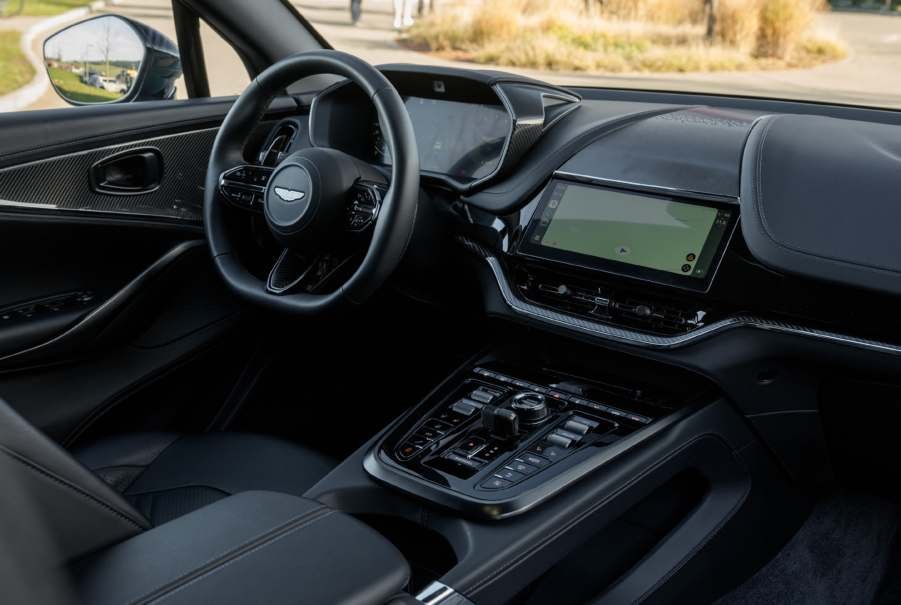
Inside, Aston Martin has finally addressed its one genuine shortcoming: the onboard technology, long inherited from an older generation of Mercedes systems. A smooth, responsive 26-centimetre central touchscreen, wireless Apple CarPlay, of course, and solid metal rotary controls for the volume and climate — the technology is where it needs to be, discreet and effective. Hand-stitched leather covers every surface you touch. The finishes have the warmth of objects made with intention.
By late afternoon, the first rumbles of thunder echo above the turquoise waters of the Gulf of Orosei, and the sky intermittently disappears behind the clouds. The DBX 707 is idling, its 697 horses dozing — for now. This is the definition of a great GT SUV: a machine perfectly at ease across the entire spectrum of driving, according to the driver’s mood.
Aston Martin had never built an SUV. It took them less than five years to make it seem as though they had been doing it all along.