





John and Cynthia wanted education to offer possibilities for students that were relevant to the future. At the time, they had two school-age kids and were looking at homeschooling as being preferable to sending them to a traditional school.
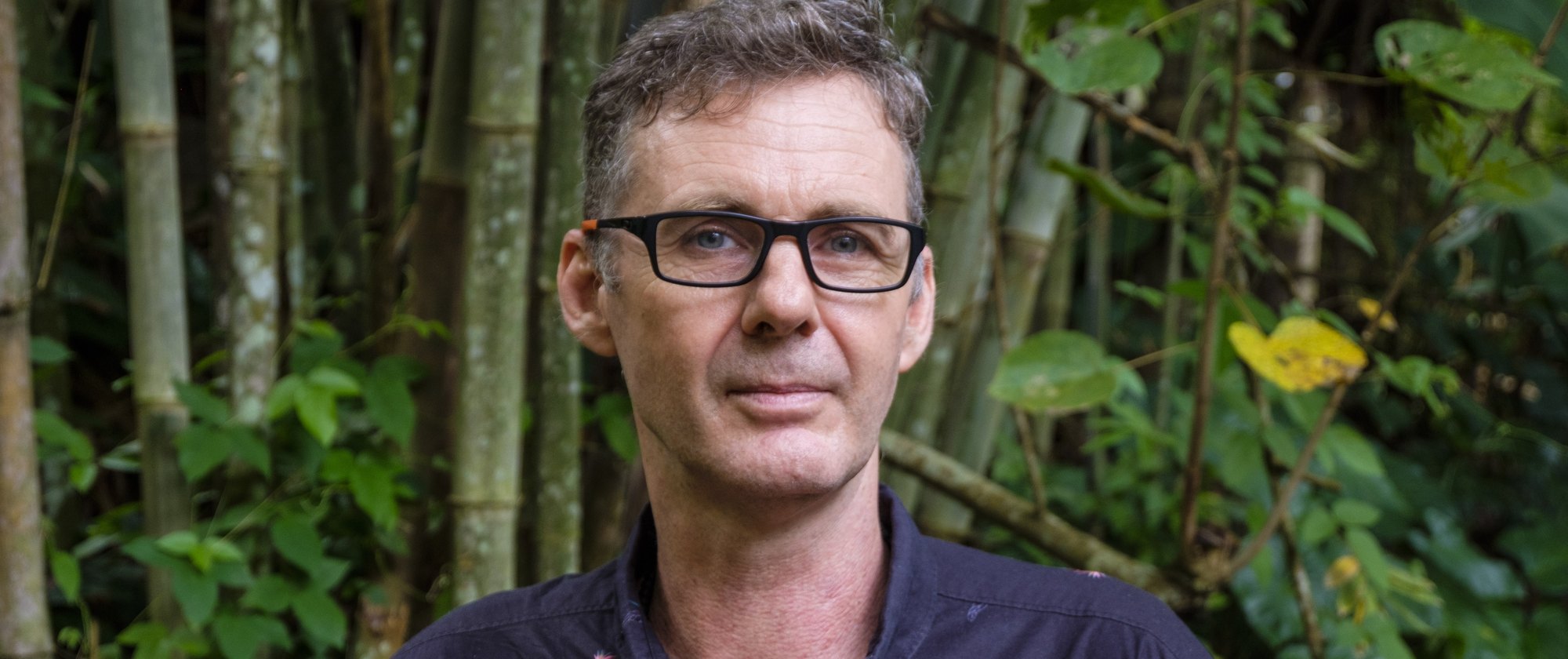
WHEREVER catches up with Sal Gordon, the head of this very different school.
What first brought you to Bali?
I was in Australia trying to create innovation and transformation from within the traditional, public school system, where I was designing units around sustainable education. Despite working within that system, I didn’t feel like a traditional school was something I wanted my own kids to be a part of. I found Green School Bali – a place that was so outside the traditional paradigm and innovating to the point of helping create a new paradigm that prepares kids for the C21st. As a parent, I was more than happy to bring my kids to the school. That was almost a decade ago now.
Was it a childhood dream to run a school?
I love my job. I love this school. But I wouldn’t say it’s a childhood dream. I wanted to be an astronaut! But I try to infuse my own childhood dreams and longings for play and creativity into this school.
It sounds like paradise. We agree that the current educational system is clearly outdated. How hard / easy was it to create something out of the usual boundaries?
I think one thing we realised quickly is that this idea would not succeed if we didn’t bring the entire community along for the journey - that means not just students and teachers but also parents, staff, local government, neighbouring villagers, environmental organisations on the island, and so on. Cultivating a keen sense of community has since become foundational to what we do at Green School.
Initially, we had the choice of boarding at Green School but eventually we realised how essential it was for parents to be part of the learning journey alongside their children. The more we’ve come together as a community in this education revolution, the more we enrich, nourish and motivate each other. If our campus is the beating heart of Green School, our community is the lifeblood.
What really motivated you to push the boundaries of traditional education and set up the Green School?
I’ve always been someone who thinks outside of the boundaries, so I guess I didn’t need much motivation there. What I’ve known since joining Green School is that what we create here will inspire a new kind of future - one that is balanced and able to support all life. To achieve that balance, we need to first create a more balanced definition of success. Right now, it’s all about achievement and profit and progress. At Green School, we look at how our students are progressing holistically, including knowledge and skills acquisition, yes, but also looking at how they are internalising and demonstrating our iRespect values - integrity, responsibility, equality, sustainability, peace, empathy, community and trust.
“Our mission then, and still today, is to create a community of learners that will make our world sustainable.”
The way we’ve co-evolved with our community is also something that, in my opinion, the world needs more examples of. Schools shouldn’t exist in silos but be cultural hubs for their communities. This is how we make the world a better place. This is one of the many things that makes Green School so unique. It says it in our mission - we have a community of learners - and we stick to that. Rather than being a place where parents leave their children at the curb, we have a living community of learners - meaning both students, parents, and everyone else involved - who have a lot of interaction with each other so we’re all furthering each other’s learning. In fact, Green School has about 10% of its students from the local community, kids from the local villages. We have the largest local scholarship programme of any international school in Indonesia, and we’re immensely proud of that. We also have a programme after school for local kids to come and learn English and computer skills, which has been hugely powerful for them.
Our primary motivation is to create a new model of education, with sustainability at its core - for schools to be places of fun, meaningful life-long learning, and positive impact.
Would you describe yourselves as Educational Pioneers?
We are pioneers in the sense that we want to evolve what the purpose of a school is. We have not re-considered the purpose for school since the traditional school system was set up more than a century ago during the industrial revolution. It has not adapted fast enough to our fast-changing world. Today, we are facing increasingly complex challenges - both social and environmental. At Green School Bali environmental action is the foundational purpose of our school - educating FOR sustainability - and our learning programmes are designed with environmental action embedded across the experience. Simply put - we are pioneering education and school to make the world a better place.
Can you pinpoint key turning points in your life?
I moved away from home to go to a private school when I was 13 years old - I had to grow up quickly. I learned how to take responsibility for my own life and learning. After my first university degree, I took a gap year, which ended up lasting a decade. That was a turning point.
When I started my career as an educator – slightly disillusioned with a system that hadn’t changed since I was a student - I made a conscious decision to be a part of the solution. I wanted education to be different, so I decided to do something about it. And that’s why I’m here at Green School Bali.
Any words of wisdom? Or lessons learned?
Find a mantra, something that helps define your purpose. For a long time, mine was ‘learn more’. All I wanted to do was LEARN… languages, cultures, skills, music, art, science. I bring that mantra to what I do now, where I help support our faculty to nurture our students to be lifelong learners.
How is life in Bali now?
It has changed a lot in the last few years.
We had some quieter years here during the pandemic, but things are getting back to normal once again. Like other highly trafficked tourist destinations, there is a lot of development happening, especially in the main expat hubs of Ubud and Canggu. I think places like Green School, Desa Potato Head and other eco-minded organisations here are helping to keep that development in check, because you do have a lot of expats who come here seeking peace and sanctuary in nature.
How has the expat community changed?
Our Green School Bali expat community has always been very mission-aligned. We are community-minded and we all believe we have a role to play in making our world sustainable.
What are the plans for 2023? Any more new ventures?
In 2021 Green School became part of Education in Motion’s global family of school brands. We’re looking ahead to bring our education model and mission to other parts of the world!
“What we create here will inspire a new kind of future, one that is balanced and able to support all life.”